SALT MARSH PUBLICATIONS
|
SALT MARSH PUBLICATIONS |
|
|
|
HISTORIC HILLSBOROUGH
|
|
|
| In the period 1680-1710, the Occaneechi Indians established a village on the
banks of the Eno River at the edge of Hillsborough, NC. In 1754, English
colonists founded the town of Hillsborough at the place where the Indian
Trading Path crossed the Eno River.
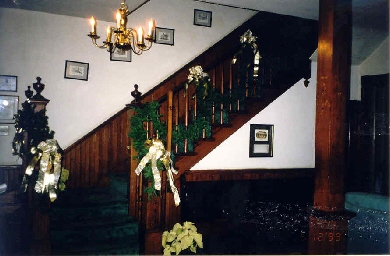
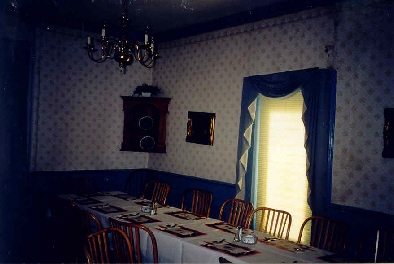
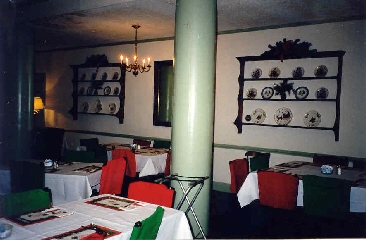
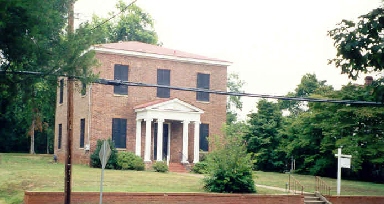
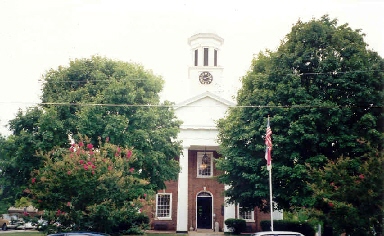
In 1759, a wayside tavern, the "Tavern House" (now the "Colonial Inn"), was built in the center of town--serving business people from neighboring areas and travelers. A little over ten years later in 1771, Hillsborough was the seat of early resistance to British rule when citizens led the Regulator Movement in rebellion to British taxes. The leaders of the Regulator Movement were hanged in the street as an example to others who would seek to disobey the King's laws. After the hanging, the properties of the perpetrators were burned. A spark from one of the fires ignited the nearby Tavern House and partially burned it. The present foundation was built over the charred timbers. The inn is currently closed for renovation--with plans to reopen in the future. In the Revolutionary Period, General Cornwallis stayed in the town--using the Tavern House as his headquarters in 1781. Aaron Burr, the third vice-president of the young country, and Dolly Madison, the wife of President Madison, were later guests at the Tavern House. Hillsborough was later the site of the last large gathering of troops during the American Civil War. Both the Confederate forces under General Johnston and the Union troops under General Sherman camped around the town for nine days while the generals met at "Bennett Place"--about 15 miles away outside of Durham. It was here that the final peace treaty was signed. Bennett Place--with a Civil War museum--is open to the public today. The town of Hillsborough has been designated as a National Historic District--with many of the original buildings from the 1700's still preserved in its downtown area. The town has a re-created Occaneechi Indian village, an historical museum, and a Visitors' Center housed in the home where Confederate General Johnston and his troops stayed during the nearby Civil War peace talks. The Visitors' Center also provides a walking tour map. The photo gallery shows the old Tavern House--now the Colonial Inn--and other eighteenth-century buildings around town that are featured in the Hillsborough books. Also shown on another page are Sarah and Henry Stroud, the main characters of the Hillsborough Books. Additional information regarding Hillsborough may be found at www.historichillsborough.org/. For more information on the end of the Civil War in North Carolina and Bennett Place, the location of the final peace treaty see www.ah.dcr.state.nc.us/sections/hs/bennett/bennett.htm. |
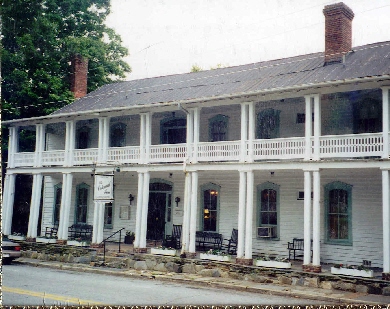 Colonial Inn
 Lobby
Colonial Inn Dining Room
Colonial Inn Dining Room
Masonic Lodge
Old Orange County Courthouse
Henry & Rebecca Stroud Graves |